The Elite's Calculation Method: How to Internalize Stockfish NNUE Evaluation Patterns
Most club players calculate like obsolete computers from the nineties: they process miles of forced lines that lead to absolute nothingness because they are unable to evaluate the final position. You calculate five moves, get tired, decide by intuition that your position "seems active" and, three moves later, you are signing the scoresheet. Your problem is not a lack of visual memory; it is a flawed evaluation system.
To optimize chess tactical calculation, you must understand that the modern engine does not calculate more, it calculates better.
Specifically, Stockfish NNUE (Efficiently Updatable Neural Networks) has revolutionized positional understanding by combining the brute force of silicon with a structural sensitivity that mimics—and surpasses—human intuition. If you want to level up, you must reprogram your brain to evaluate variations under these new guidelines.
Linear Calculation Bias vs. Layered Evaluation
The average player approaches calculation as an infinite decision tree. They open branches, get lost in insignificant sub-variations, and suffer from cognitive fatigue. Engines no longer do that. The NNUE revolution lies in its ability to evaluate positions without needing to go twenty moves deep into every dead-end sub-line.
How does it do it? By immediately evaluating the harmony of the pieces in direct relation to the pawn structure.
To improve chess visualization, you need to learn to pause your mental calculation at what we call "quiet positions". Do not stop when there are no more checks or captures; stop when the tactical tension dissipates and objectively evaluate who dominates the weak squares and who has the worse structure. If you cannot evaluate that final static picture, calculating ten moves is a waste of time.
Your Chess Calculation Method is Obsolete: How to Correct It
Traditional training has conditioned us poorly. Solving "White to play and win" tactics creates a dangerous cognitive bias: it teaches you that there is always a knockout blow. In real games against tough opponents, tactics are often defensive or aimed at positional consolidation.
To redesign your chess calculation method, apply these three pillars immediately:
- Obsessive prophylaxis: Before moving a single finger in your mind to calculate your attack, decipher your opponent's threat. If you do not understand the enemy's counterplay, your combination is dead on arrival.
- Aggressive variation pruning: Limit your candidate moves to a maximum of three. If you analyze five options on every turn, you will collapse from analysis paralysis.
- Block calculation: Visualize friendly pieces cooperating in subgroups, not in isolation. Stockfish evaluates the strength of a bishop not by its open diagonal, but by how it restricts the opponent's knights' counterplay.
The Chess Training Protocol for the Modern Era
The next time you sit down to train, turn off the screen and move the mouse away. Your chess training must focus on the quality of the process, not on the quantity of puzzles solved on an online platform.
Take a game of modern Grandmasters, for example, any of Magnus Carlsen's positional victories in seemingly equal endgames. Stop the playback at the moment of maximum positional tension. Try to calculate three moves cleanly and numerically evaluate the resulting position from +3 to -3. Then, turn on the engine and contrast your verdict.
Don't focus on whether you saw the winning combination; focus on why your evaluation differed from the engine's by just three-tenths of a pawn. That is where mastery lies.
The next time you enter a complex tactical line, ask yourself: are you calculating to create real threats, or simply to escape positional tension?
Initiative is a depreciating asset with every passive move; calculate it accurately or suffer the consequences.
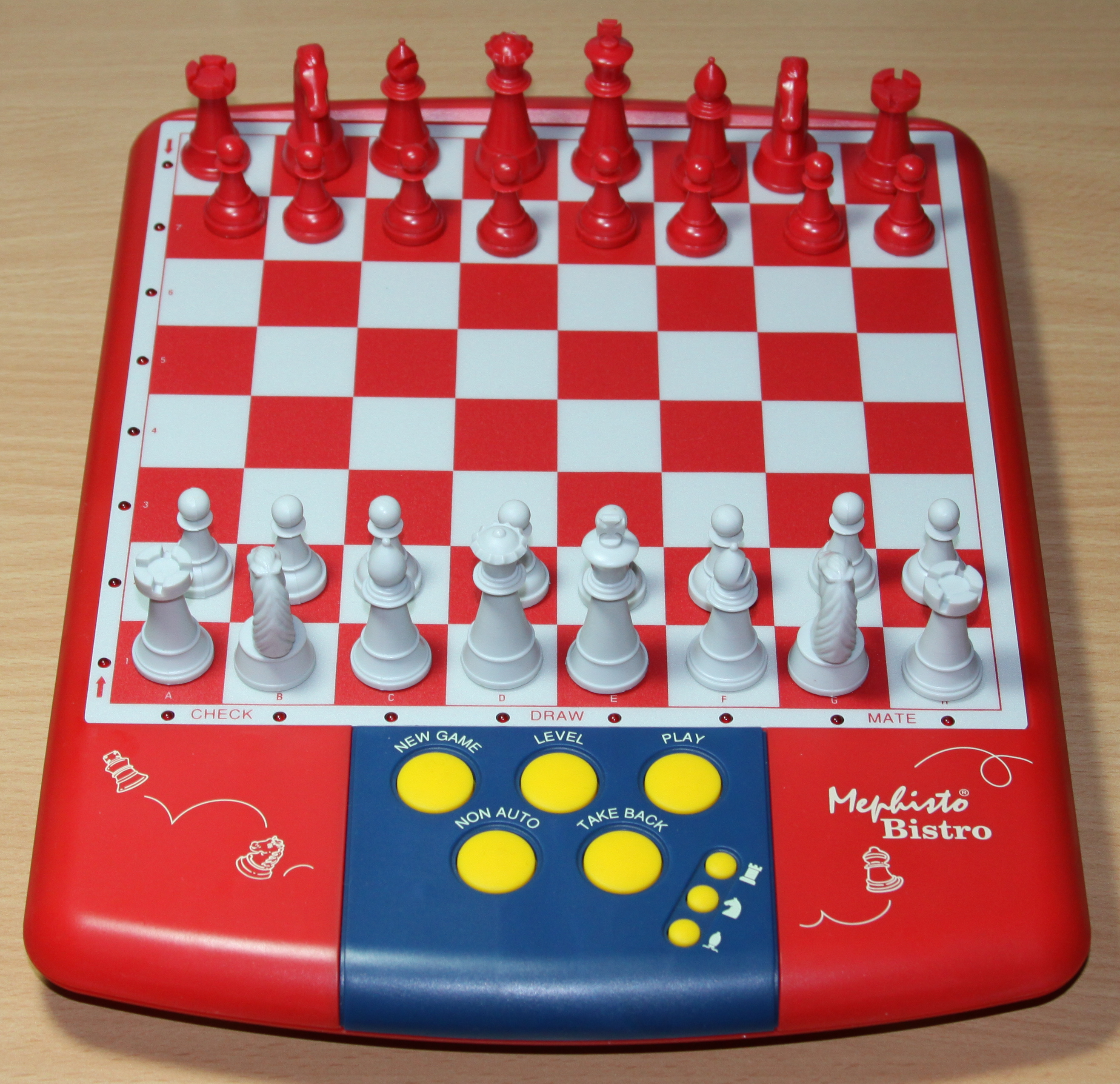
Foto de portada por Morn bajo licencia CC BY-SA 4.0.